How to See Stars From a Light-Polluted City (Without Leaving Your Block)
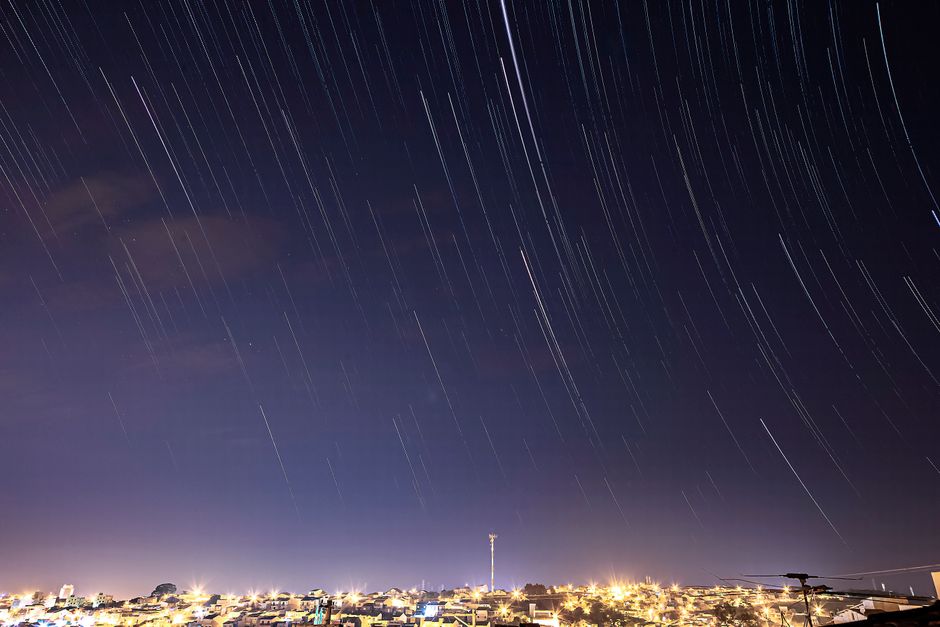
There's a stubborn myth that city dwellers can't stargaze. The sky over a dense neighborhood is washed out, sure, but it's not empty. On a clear night from my apartment balcony, I can reliably catch the Moon, Jupiter, Saturn, Venus, Mars, and a handful of the brightest stars — Vega, Arcturus, Capella, Sirius, and Betelgeuse all punch through the glow if you know when and where to find them. That's not a consolation prize. That's a real night sky, just a smaller one.
The trick is to stop comparing your sky to a dark-sky photo and start learning what your specific sky can actually show you. Light pollution doesn't erase everything; it raises the floor. Objects brighter than that floor remain visible. So the practical question becomes: which objects are bright enough to clear the bar in your area, and how do you find them?
Work With Your Sky, Not Against It
Start by figuring out your limiting magnitude — roughly, the faintest star you can see. Find the Big Dipper if it's up, or Orion in winter, and count how many of its stars you can spot. If you can see the three belt stars but not much of the sword, you're in a fairly typical urban situation. If you can pick out the faintest stars in the Dipper's handle, you're in a better pocket than most. Either way, you now have a baseline.
From there, build your target list around bright objects. The Moon is the obvious one, and honestly, it's the most rewarding. Craters along the terminator — the line between light and shadow — show up beautifully even through thin haze and streetlight glow. Jupiter's four Galilean moons are visible through almost any pair of binoculars, and sometimes with the naked eye under good conditions. Saturn's rings need a small telescope, but the planet itself is an easy naked-eye point. Venus is so bright it can look like a plane. These aren't compromises. They're genuinely great sights.
Practical Habits That Make a Difference
Timing matters more than gear. The hour or two after sunset and before sunrise often has less haze and fewer people out with lights on. Winter nights are frequently clearer than summer ones in many cities, even if they're colder. And when the Moon is new or a thin crescent, the rest of the sky gets a fighting chance.
Find the darkest spot you can reach on foot — a park, a rooftop, a parking garage top level, a quiet side street. Shield your eyes from direct light sources. A hoodie pulled over your head, a hand cupped around your eye, or a simple piece of cardboard taped to a hat can block stray light and let your pupils dilate. Give your eyes fifteen to twenty minutes to adapt. Don't check your phone. That one habit alone will double what you can see.
Binoculars change everything. A cheap pair of 7x50s or 10x50s gathers far more light than your eyes and turns the city sky from a handful of dots into a real observing session. You'll split double stars, spot the Orion Nebula as a fuzzy patch, and trace the moons of Jupiter. No telescope required to start.
The city sky is not a lesser sky. It's a different one, and it rewards patience and a little local knowledge more than expensive equipment. Learn your limits, pick your nights, and the stars will meet you where you are.